News
- Details
- Written by: Chris G4ZCS
- Category: News
- Hits: 130

June is usually a busy gardening month for me, however it started quite well on the radio.
The 1st bought in OJ0Z, RI0SP (again) PY4PTO and LW2EDM plus several locals. The 2nd Tl8BNW, VK6AS, TR8CA. The 3rd 9M8DEN and the usual locals on the club net.
On the 6th I bagged C91RU in Mozambique bringing my annual score to 196 DXCC's. The 10th I worked Bulgaria LZ370TL for another of this years 'Saints' stations, I now have over 70 confirmed!
The last one worked that evening was VK2NN from Sydney. The 15th bought in RI0SP in another polar grid, (there can't be that many more to work) and on the 17th I managed to contact W4KWS in Florida - his grid square is EL94 and the island is NA-092, (Key West), the most southerly point of the USA, just 90 miles from Cuba. The 18th I worked VE7SNC on Vancouver island for NA-036, showing that there are still a couple of northern openings.
The 26th I heard GB198KHZ celebrating the shut down of the high power LW transmitters. The WWW stated loads of reasons for doing this, however, my guess is that EDF have just sent them the latest electricity bill! And so to the month's end - I managed VP8VK my names sake in East Falkland.
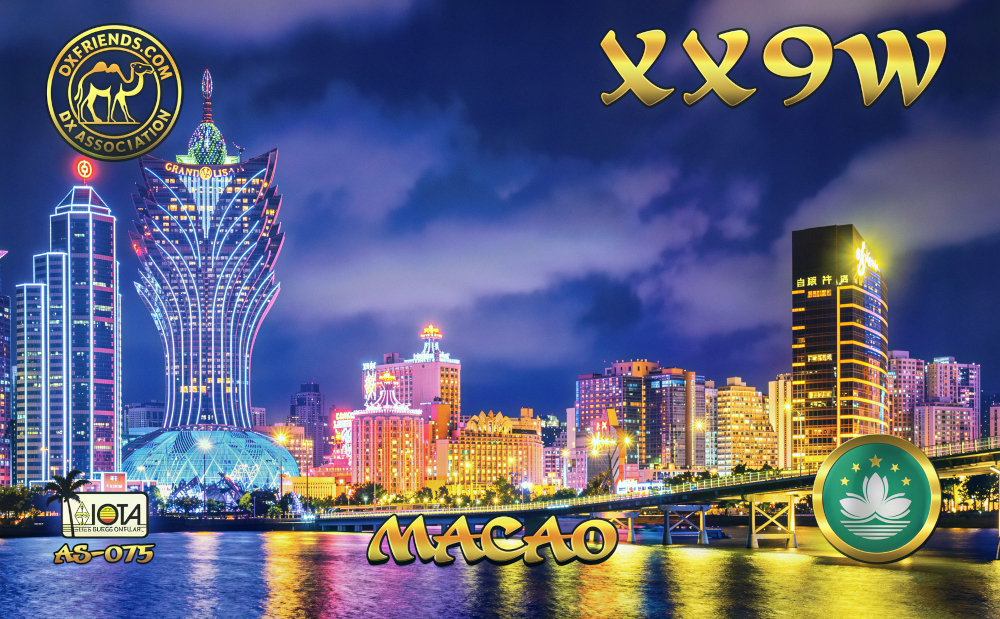
The postie has been busy again, this time a QSL from Macao, XX9W on AS-075 (above). I worked Macao many years ago but never got confirmation for that contact. This, together with a ClubLog update have added four to my IOTA score. And just to show off, I got S21WD from Bangladesh and AS- 140 confirmed!

Good Dxing.
Chris, G4ZCS
- Details
- Written by: Maintenance Guy
- Category: News
- Hits: 136
Our friend and fellow member Bob N4XAT has been taken ill, and is currently in hospital. I don't have any more information on his condition at the moment, but this note is to let other members know that he has no access to email during his admission, but he does have WhatsApp. If anyone does get any info, please let me know and I'll update this post.
Berni M0XYF
- Details
- Written by: Maintenance Guy
- Category: News
- Hits: 174
Alex Henderson M0TOT is selling the following on FBM. Check them out there directly to message him.
1) UV Lightbox, which was used, with acetate sheets, for making PCBs - £35 - NOW SOLD
2) Wall brackets for radio masts - £20
For club members these prices are negotiable!
Search for Alex by name here:
https://www.facebook.com/marketplace/you/selling?locale=en_GB
- Details
- Written by: Chris G4ZCS
- Category: News
- Hits: 164
A few months back I made a submission to another magazine. Most was printed, however their editor added a note that reminded me it is now 70 years since I started in the hobby. Perhaps with your editor's permission I'll do a brief history how I got here.
Unlike last month, this one started off fairly quietly, with little DX to speak of.
Until the 3rd, when something switched on! B8CRA was the first, closely followed by B3CRA, B7CRA, an interruption by BA3QIQ. Then B4CRA, B9CRA, a short break then B1CRA, B5CRA and finally B0CRA, B2CRA and B6CRA. According to my reckoning having worked all 10 special calls I qualify for a golden Chinese award (some of you might remember I got a silver one back in 2023).
Something similar occurred on the 6th with Japan. This time I was playing with FT4 for a change, 19 Japanese stations in a little over an hour. Mixed in were Bulgaria, Cuba, USA, China (surprise) Romania, Australia, Thailand, Spain, Russia, Canary Isl's, and Brazil. It was just like a contest for a while.
The 7th was quiet again with only T31TTT of note. Central Kiribati (OC-043) is just about as far as one can go from here so to get a contact was a surprise, especially as there was no sign of anything on the waterfall screen, first call and a -13 -03 decoded report! All confirmed on ClubLog. (See later)
On the 10th another surprise, I worked VK0DS from Davis Base, my first Antarctic contact this year. IOTA AN-016 is on the mainland. With the addition of OA4DOS, EY7BM, 9J2FI, EP5TJS, and XT2AW - by now I'm over the top darts score of 180 for this year's DXCC score. The 12th bought in EP5TJS from war torn northern Iran, followed by HK4/PY8WW on SA-093, which is a very rare island indeed.
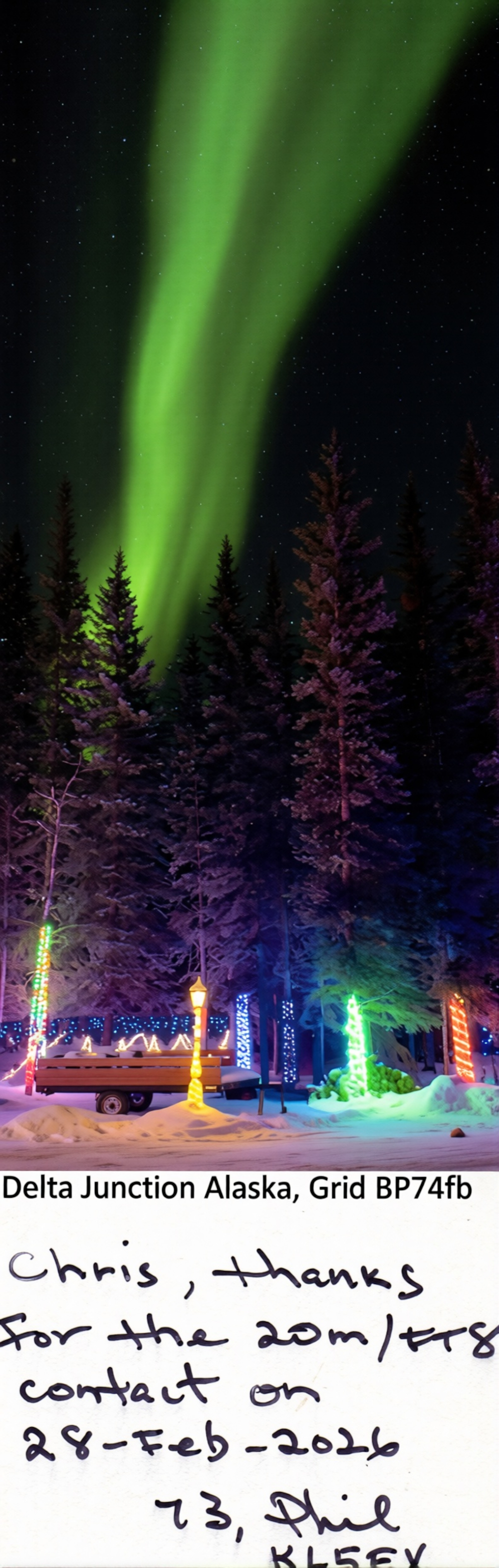
The postman dropped another rather flashy envelope on the doormat. It contained a very nice QSL from KL5EX who resides at Delta Junction in Alaska, population 918!
The next few days in the middle of the month I worked loads of stations, however mostly 'locals'.
As I had been back on Chemotherapy, things slowed almost to a stop but suddenly I worked HL2IFR on 20m FT2. From there to the end of the month it all picked up again. After nearly a week of trying I bagged 3G0Z from Robinson Crusoe Isl' on SA-005, and on 40m FT8, ZL7IO on Chatham Island, for OC-038. This one is even further away than T31 worked earlier in the month. (See above)
As promised I am including a short bit on FT2. The workings are very similar to FT8 and FT4 however it's a lot faster. When I was teaching foundation level courses I felt the need to add a bit about bandwidth, power and speed (I knew it would come in useful). Because of the speed that FT2 data is sent (twice as fast/half the time compared with FT4), each signal has to take up twice the bandwidth. This means that there are less 'slots' available without treading on the adjacent signal.
Having worked over 300 contacts I can say that DX is still possible, but the decode level to complete the contact is a bit higher than with the other modes. I suspect that the higher speeds are giving the PC a bit of brain ache! So far I have worked 55 DXCCs including W Malaysia, Qatar, Japan, Alaska, Brazil, Asiatic Russia, Kazakhstan, USA, and South Africa.
[I suspect that as timing is so very critical for FT2, a higher percentage of data is either lost or corrupted per data-exchange - relatively - and therefor more FEC repair work is required before CRC checking, as well as generally compressed FFT times, sync times and other software stack ops like audio buffering, OS scheduling, CAT control and rig keying. There is an awful lot to get done in that tiny decode window of 1.3 - 1.9s! - Berni M0XYF]
That's enough for now so good DXing,
Chris G4ZCS
- Details
- Written by: Maintenance Guy
- Category: News
- Hits: 166
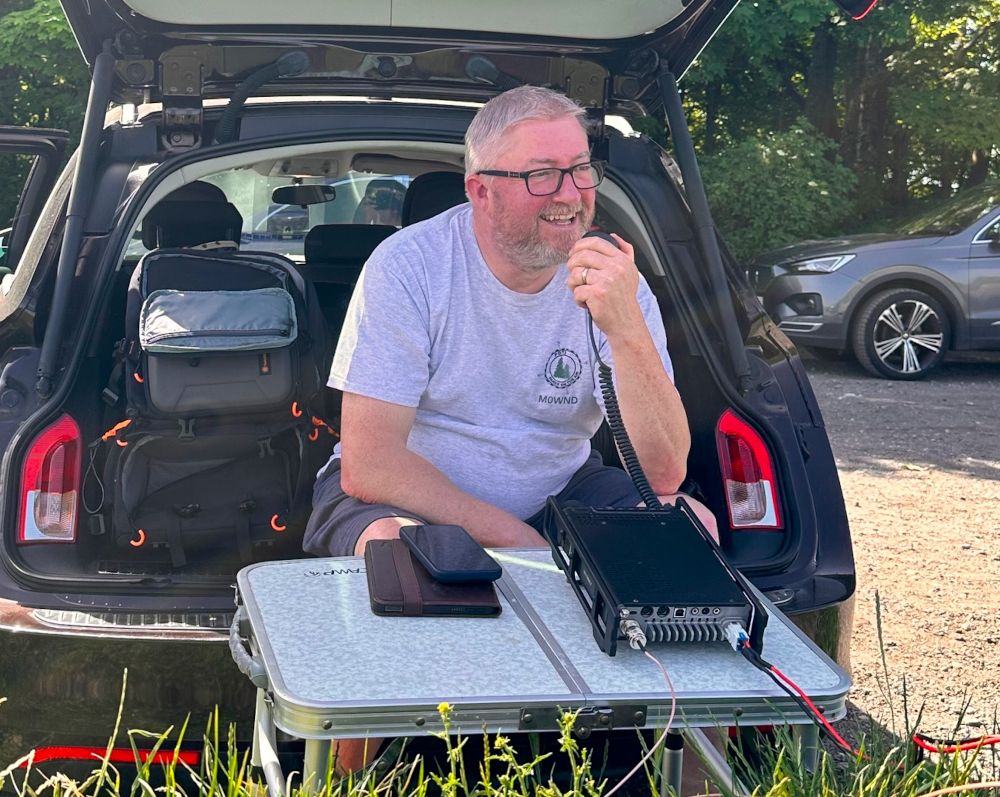
Tony M0WND had a successful activation of the G5RV callsign on Monday as planned. It was stinking hot as you will surely remember, and time was called early which was a shame (but very sensible) and I missed him by about five minutes. I must get up earlier. Hope you had fun Tony.
A few pictures attached, one showing a very random but welcome call-in from Alaska! Also, check out the cheeky T-shirt.
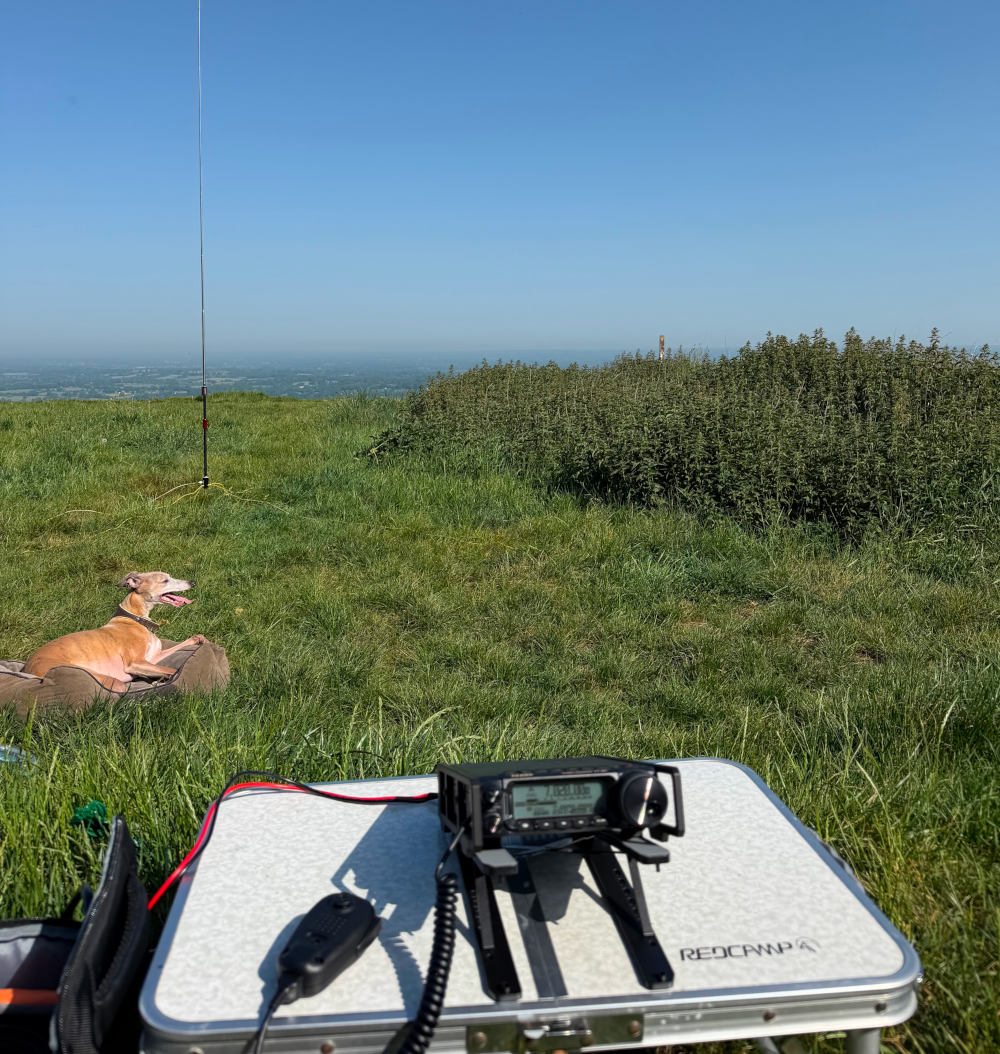
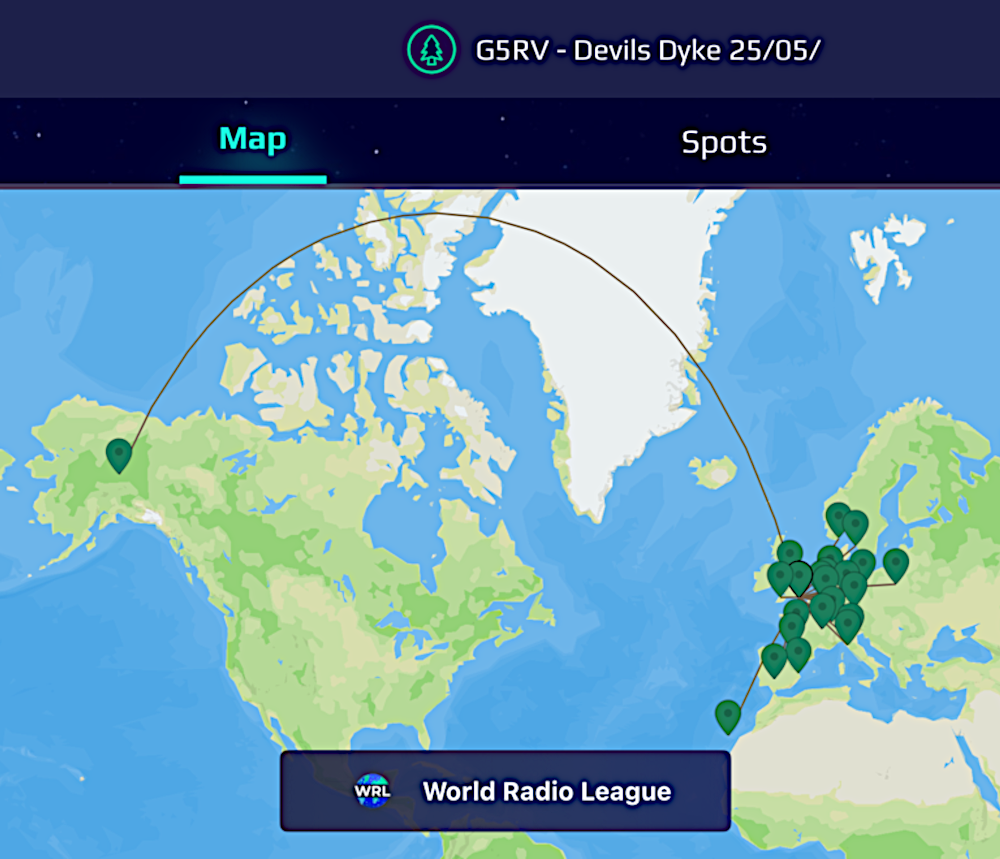
POTA logs have been uploaded for parks GB-0265 (South Downs National Park) and GB-1415 (Devil's Dyke), and you can see a summary of recent G5RV activations here: https://pota.app/#/profile/G5RV